Computer Systems
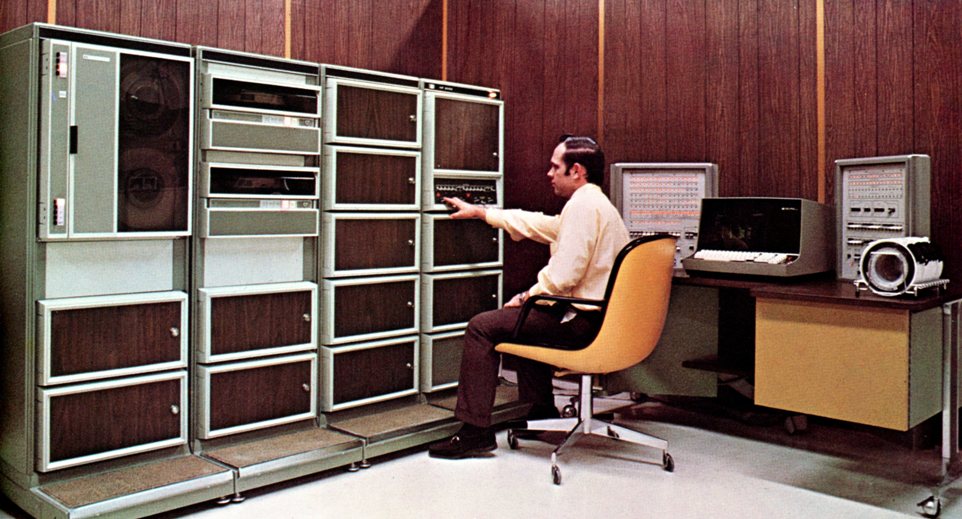 | 3000 Selection: |
| 1) 3000 (1972) | |
| 2) 3000 CX (1974) | |
| 3) 3000 Series II (1976) | |
| 4) 3000 Series I (1977) | |
| 5) 3000 Series III (1978) | |
| 6) 3000 Series 33 (1978) | |
| 7) 3000 Series 30 (1979) | |
| 8) 3000 Series 44 (1980) | |
| 9) 3000 Series 64 (1981) | |
| 10) 3000 Series 37 (1984) | |
| 11) 3000 Series 58 (1985) | |
| 12) 3000 Micro CX (1986) | |
| 13) 3000 Micro XE (1986) | |
| 14) 3000/950 (1987) | |
| 15) 3000 Micro LX/GX/RX (1988) | |
| 16) 3000 925LX (1988) | |
| 17) 3000 935 (1988) | |
| 18) 3000 922LX (1989) | |
| 19) 3000 9X7 (1991) | |
| 20) 3000 9X8 (1993) | |
HP entered the business mini computer market with the HP 3000 in 1972. The 3000 was launched from HP's Data Systems Division. In 1975, the General Systems Division was formed to assume responsibility for all 3000 activities. In 1980, the Computer Systems Division was formed to assume responsibility for 3000 hardware and operating system. The hardware for HP-PA 3000 systems and 9000 systems was almost identical (beginning in the late 1980s). The interfaces and other hardware items that were common between the two computer families are listed on our 800 Series Accessories page. For manuals that are common to PA-RISC 3000 systems and 800 Series computers, please visit the product documentation page for 800 Series computers . Beginning in the early 1990s, HP made manuals for 3000 computers (operating system, applications, languages, utilities, operation, etc) available on CD ROM (called "LaserROM" discs). Many of those manuals are posted on this site; some are not. A complete listing of MPE V manuals as of 1992 is here. A complete listing of MPE/XL manuals as of 1992 is here. The museum has a collection of software available for download for these computers. Click here for the software listing. If you need MPE programming services, we suggest you contact 3K Ranger . Stromsys makes an emulator for HP3000 MPE/iX 7.5. The 3000 Newswire has thousands of articles reports and references on the HP3000. Click here to see the museum's collection of user group materials for 3000 systems. | |
| Back | Product Documentation | Category Accessories |
^ TOP©2004 - 2024 BGImages Australia - All Rights Reserved.
The HP Computer Museum and BGImages Australia are not affiliated with HP Inc. or with Hewlett Packard Enterprise. Hewlett Packard and the HP logo are trademarks of HP Inc and Hewlett Packard Enterprise. This website is intended solely for research and education purposes.